Welcome to "Charming Champaran Captivating Champaran" Bihar India !
(All the images are subject to IPR)
It is an open invitation to people of the world on the occasion of World Tourism Day to visit Champaran of Bihar India. Champaran is the first place where Mahatma Gandhi experimented his weapon of Satyagraha & Non-violence against European indigo planters for the exploitation of the poor peasants, for the first time in India, after he came from South Africa. And for the first time on the Indian soil Satyagraha was successfully put to test.
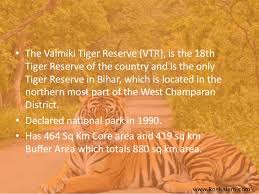
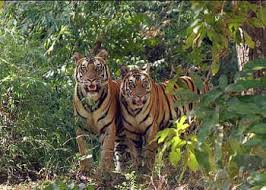
Champaran has the only tiger reserve Valmikinagar Tiger Reserve (VTR) of Bihar located in the foothills of Shivalik (Tresses of Shiva) hills rich in bio-diversity. It has Valmikinagar Wildlife Sanctuary also.
 |
| Courtesy:slideshare.net |
 |
| Courtesy :indialine.com |
 |
| Courtesy:thevisitbihar.com |
Champaran has a place called Bhainsa Lotan now known as Valmiki Nagar, also famous for Valmiki Ashram where Maharshi Valmiki, the author of the great epic Ramayana, is believed to have stayed for some time.
 |
Valmikinagar Dam
Courtesy:westchamparan.bihar.nic.in |
Land of Champaran has been very fertile and its terai region along the border of India & Nepal has been the abode of one of the most innocent and cultured tribes known as Tharus.
 |
Beautiful Terai region in the backdrop of Shivalik Hills
Image (C) Dr Ajay Kumar Ojha |
 |
Prof Rabindra Nath Ojha amidst Tharu Tribe in Tharuhat of West Champaran
Image (C) Dr Ajay Kumar Ojha |
Champaran has been the land of the great poet Gopal Singh 'Nepali', great intellectual/ author/ social reformer Champaran Vibhuti Prof Rabindra Nath Ojha, great scholar Prof (Dr) Balram Mishra.
Champaran is the land of well-known Film Producer & Director Prakash Jha, great actor Manoj Bajpai, senior Bureaucrat Raghav Sharan Pandey IAS (Former Secretary Ministry of Petroleum Govt. of India).
In 1972 West Champaran district was carved out of the old Chamaparan district as a result of re-organization of District in the state. So now Champaran has got two districts - East Champaran & West Champaran.
Champaran has been the Buddhist treasure trove dotted with many ruins of Buddhist Stupas, Ashokan Pillars and important route to Kapilvastu & Tibet from Bodh Gaya via Bhikhna Thori on the Indo-Nepal border.
Bhikhna Thori
It is believed that this place might have been a place of importance in ancient times. Even today Bhikhna Thori is a well known tourist destination cradled in Shivalik range of Himalayas and considered important for its monuments. There is a route to Tibet 8 km North of Rampurva in West Champaran via Thori in Nepal. According to Prof (Dr) Balram Mishra, a great scholar of Champaran, Bodh Bhikshu used to enter into India or to Nepal via this place and stayed there, that is why this place in ancient times called "Bhikshu Sthavir" which later on became Bhikhna Thori.
 |
Dr Ajay Kumar Ojha with his Tharu Tribe Friend Dharmraj Khatait in Bhikhna Thori of West Champaran Bihar
Image (C) Dr Ajay Kumar Ojha |
Rampurva
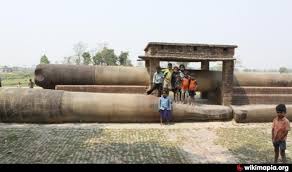
Two Ashokan Pillars have been dug out in Rampurva village which is 8 km of Gaunaha railway station close to the border of Nepal. The village is on the banks of river Hadboda. Both the Pillars are now in lying position under RCC shed. One of them was inscribed and was surmounted by a Lion while the other was uninscribed and carried a Bull Capital. Bull Capital is at Rashtrapati Bhavan, New Delhi and Lion Capital at National Museum Kolkata.
 |
| Courtesy:wikimapia.org |
During Buddhist era it was an important route which started from Srivatsa and connected Kapilvastu and passed through, Bhikhna Thori, Rampurva, Lauria, Nandangarh, Bettiah, Lauria Areraj, Kesaria, Patliputra (Patna), Rajgir and reached Bodh Gaya.
Lauriya Nandangarh is a town located 28 km northwest of Bettiah, the headquarters of West Champaran district of Bihar. Lauriya derived its name from a pillar (Laur) of Mauryan emperor Ashoka, which is located here. Nandangarh is the name of a mound, situated 2 km to the south-west of the Ashoka Pillar. According to many historians, as many as forty pillars were constructed in Lauriya Nandangarh by Ashoka. In the present time, there is only one pillar at this site, which stands in its complete form.
LAURIYA
Less than half a kilometer from the village Lauriya & 2 KM from the Nandangarh mound stands the well-known pillar of Ashoka. It is a single block of polished sandstone over 32 feet (10 m) high. The top is bell shaped with a circular abacus ornamented with Brahmi geese supporting the statue of a lion.
 |
| Photo(c) Dr Ajay Kumar Ojha |
The pillar is inscribed with the edicts of Ashoka in clear and beautifully cut characters. The lion has been chipped in the mouth and the column bears the mark of time just below the top which has itself been slightly dislodged. Signs of vandalism over the years are clearly visible.
 |
| Photo(c) Dr Ajay Kumar Ojha |
|
NANDANGARH
Lauriya Nandangarh is also a location for about 20 archaeological mounds arranged in three rows. The excavation of Nandangarh, an 82-feet high mound, yielded the remains of a huge Stupa, which had a circumference of about 1500 ft near the base.
 |
| Photo(c) Dr Ajay Kumar Ojha |
|
 |
| Photo(c) Dr Ajay Kumar Ojha |
|
 |
| Photo(c) Dr Ajay Kumar Ojha |
|
 |
| Photo(c) Dr Ajay Kumar Ojha |
|
The discovery of this Stupa has brought to light number of stone beads, terracotta figures, punch marked cast coins, which prove that it was constructed during 2nd century AD. It is believed that the Stupa enshrines the ashes of Lord Buddha.
 |
| Photo(c) Dr Ajay Kumar Ojha |
|
 |
| Photo(c) Dr Ajay Kumar Ojha |
|
 |
One of the 20 Mounds other than Nandangarh near Lauria
Photo (c) Dr Ajay Kumar Ojha
|
KESARIA STUPA ( EAST CHAMPARAN , BIHAR)
Kesariya is a town in Bihar, India in the district of East Champaran, near Rampur Khajuria on NH28 on the eastern bank of River Gandak (Narayani). It is the site of a stupa built by the King Ashoka. It is one of, if not the largest stupa in India. The Buddha once stayed in Kesariya (then called "Kesaputta"). On that occasion, he preached the Kesaputtiya Suttas which include the Kalama Sutta. The inhabitants of Kesariya were the Kosalans and the Kalamas.
 |
| Photo (c) Dr Ajay Kumar Ojha |
 |
| Photo (c) Dr Ajay Kumar Ojha |
Kesaria claims the tallest and the largest Buddhist Stupa in the world. The stupa was discovered in 1998 during an excavation by the Archaeological Survey of India (ASI). The stupa dates to between 200 AD and 750 AD and may have been associated with the 4th century ruler, Raja Chakravarti.
 |
| Photo (c) Dr Ajay Kumar Ojha |
 |
| Photo (c) Dr Ajay Kumar Ojha |
At 104 feet, Kesaria Stupa is one foot taller than the Borobodur Stupa in Java. It is also taller than the second largest stupa at Ghorakatora in the Nalanda district. The National Informatics Centre of East Champaran (Motihari) suggests the Kesaria Stupa was 123 feet tall before the 1934 earthquake in Bihar. According to a report by the A.S.I., the Kesaria Stupa was originally 150 feet in height. The height of Sanchi Stupa a world heritage site is 77.50 feet.
In ancient times Kesariya was under the rule of the Mauryas and the Lichchhavis. Recent discovery ( during excavations for canals) of gold coins embossed with the seal of the Emperor Kanishka of the Kushan dynasty, confirms the ancient heritage of Kesariya. The Chinese traveller Fa-Hien had come to Kesariya, in the course of his visit to India during the Gupta Period. Later, impressed by Kesariya's geographic location and its cultural activities, another Chinese traveller, Huen-Sang also visited this place. In the accounts of his travels, he has mentioned at length about Kesariya.
Welcome to "Charming Champaran Captivating Champaran!"


